
ser etter noe og finner
februar 10, 2011 § 4 kommentarer
noe annet. Det er det normale. Lette etter gutt i båt, gutt som ror i båt alene, vann, havet, ocean, gutt med hund. Fant Bo Bartlett. Føler ubehag. Føler meg umoderne når slikt interesserer, figurer, overflate, det banale, men det får bare være. Jeg har ikke mye bruk for streker og fargesprak eller bare flater. I filmen som jeg leter etter bilder til er det hus og trær og hav og veier som forsvinner inn og over horisonten. I filmen er det folk som prater med hverandre med setninger som henger sammen, de gir og får beskjeder, de slår og dreper, de elsker av og til. Oftest bare helt til sist og kanskje litt for seint. På film er alt temmelig umoderne fremdeles. Ligner. På oss selv. Utolket.
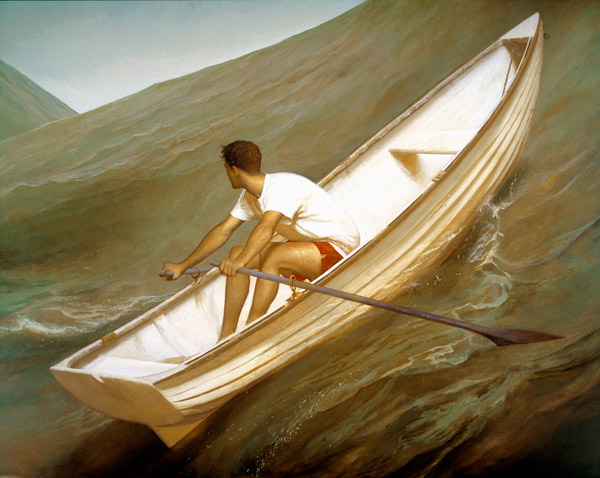


Lifeboat, Destine & Jonah.
the final sentence
januar 30, 2011 § Legg igjen en kommentar
The rivers, lakes and ocean all stood still,
And nothing stirr’d within their silent depths;
Ships sailorless lay rotting on the sea,
And their masts fell down piecemeal: as they dropp’d
They slept on the abyss without a surge—
The waves were dead; the tides were in their grave,
The moon, their mistress, had expir’d before;
The winds were wither’d in the stagnant air,
And the clouds perish’d;
Darkness had no need
Of aid from them—She was the Universe.
Darkness by Lord Byron
reblogged from The final sentence
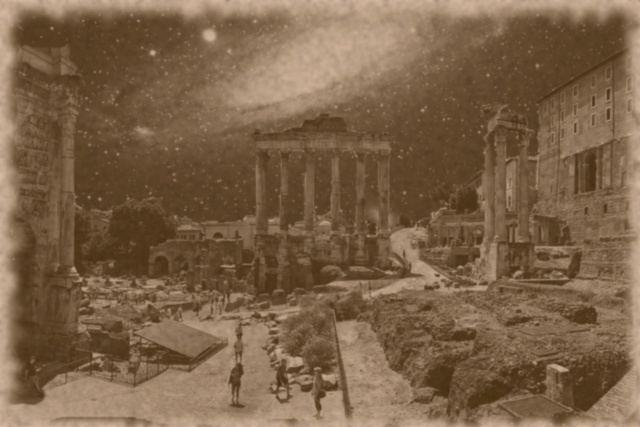
Picture reblogged from The Astronomist
woolfs skrivemaskin/min
januar 29, 2011 § 3 kommentarer

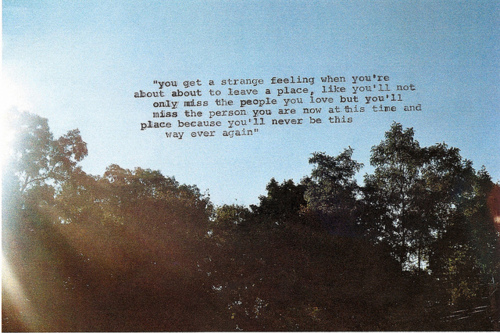
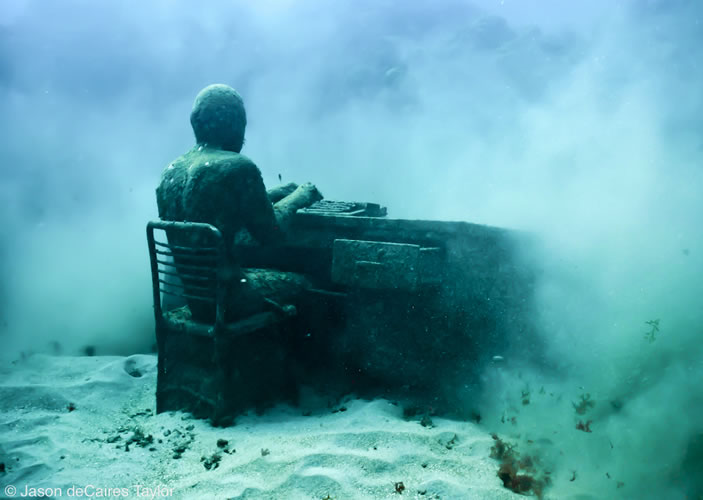
Dette kunne vært/blitt til fortellingen om hvordan Virginia Woolf, til tross for at hun elsket/fordi hun elsket, til slutt gjorde alvor av å ta livet av seg, hvordan hun, i det hun gjorde det, forsto at alt ville bli annerledes, og hva det ble til siden, hva hun savnet, skrivemaskinen.
Jeg har tenkt en del på skrivemaskinen min i det siste. Min egen. Hvor den er. Om den er. Og om det går an å få kjøpt fargebånd til den. Sort/rødt.
Jeg har alltid lurt på om Virgina Woolf skriver fremdeles.
Virginia Woolfs avskjedsbrev til Leonard Woolf / courtneytothemax, every time I move / Jason deCaires Taylor, The Lost Correspondent

if you have nowhere else to go to today, go here … Go to see Notes from a Drowning
januar 16, 2011 § 2 kommentarer

You may steal, said the Muse, but only if you can make it your own … I’m stealing from Notes from a Drowning. And if I’m not able to make it mine, truly, may I be forgiven. Maybe someone else who connects to the Drowner can.

Jorge Luis Borges
november 11, 2010 § Legg igjen en kommentar
«Jeg går langsomt, som en som kommer så langt borte fra at han ikke forventer å ankomme.»
– Jorge Luis Borges
Å … Det er sånn noen skriver. Vidåpnende. Et rom som ikke skapes av ordene i seg, men av alt det usagte som ligger mellom elementene ordene beskriver.
Mellomrommet. Det vi puster i. Det som er der helt selvfølgelig, men helt usynlig. Det vi ikke merker. Det vi ofte ignorerer. Livsviktig. Det er det som åpner seg og gir: stjerneperspektiv.

mangler bare vinger, alle sammen
september 17, 2010 § Legg igjen en kommentar
 Dave Eggers vet hvordan jeg har det. How come? Vet han andre ting om meg også? Ting jeg ikke visste at jeg visste om, men som går opp for meg når han gjør meg oppmerksom på dem?
Eller hvordan har det seg at vi er så like når vi synes vi er så forskjellige at vi nesten ikke orker å snakke sammen?
Jeg har vært uroet av denne tanken en tid: Hunder er skremmende like hverandre. Og det, enda jeg har en hund og helst så at den hadde en egen personlighet og ikke lignet for eksempel en puddel. Men det gjør den hvis jeg skal være ærlig, i så og si alle fakter og reaksjoner. I forlengelse av det, og ettersom hunden er en nokså stor del av mitt liv: Det gjør meg urolig at mitt forhold til min hund antagelig ligner til forveksling på alle hundeeieres forhold til deres kjæledyr. Jeg og de jeg treffer på kveldsturene har mer enn jeg liker å tenke på felles. Det er mer komfortabelt å føle at en har noe felles med Dave Eggers.
eugenio montale/joseph brodsky
august 29, 2010 § Legg igjen en kommentar
Joseph Brodsky, nobelprisvinner i 1991, skriver om Eugenio Montale, nobelprisvinner i 1975, i At Behaga en Skugga
Poesi är i grund och botten artikulation av en perception, en översättning av denna perception till det språkliga arvet – språket är, när allt kommer omkring, det bästa redskap som står till buds. Men hur mycket detta redskap än bidrar till att förgrena och fördjupa perceptionerna – varvid det ibland avslöjar mer än som ursprungligen avsetts, något som i lyckliga fall sammanfaller med perceptionerna – vet varje mer eller mindre erfaren diktare hur mycket som har utelämnats eller har blivit lidande på grund av det.
Clodagh Brook diskuterer Eugenio Montales arbeid i Montale and Writing: Creation or Expression
The first issue to be discussed is whether there is a duality within the inner experience before public expression takes place. Those who argue that all experience is linguistic would naturally reject any such duality. Hester writes that Wittgenstein posits language as a vehicle for thought in the Philosophical Investigations, rather than seeing thought as internal, and sees thinking not as a mental activity, but as an activity of operating with signs. Many theorists believe that no object exists without a word for it existing. If a duality is posited this would imply that the inner experience includes linguistic and non-linguistic elements …
… Whether or not these non-verbal elements actually exist, the belief, which is commonly held, that they do exist may well contribute to the sensation that some experience which is beyond language and alien to language does exist. And this sensation in turn is one of the contributing factors to the idea that something inexpressible, lying beyond language, exists. If one believes that there are elements in the mind that are in an alternative non-linguistic form, then the ‘translation’ of those elements into a linguistic form is likely to cause a radical change in their constituency — tantamount to a betrayal of their original existence …
… Montale does not agree that the outward public expression is just the pure communication or translation of some already perfect inner act. He believes that the act of writing itself is creative:
Is the lyric “a state of mind expressed”? Yes and no, as the lyric has a starting point, a state of mind, but it also has a point of arrival which is often unforeseeable and which is never, or hardly ever, the exact translation of that state of mind.
And furthermore in “Tutti in pentola” (1963) he writes:
The true poet never knows where he has to arrive at: if that was not the case every distinction between industry and art would collapse.
Eugenio Montale med kvinne og rose


Joseph Brodsky fødtes inn i en jødisk familie i Leningrad. I 1963 ble han arrestert for sosial parasitisme. Del av et utskrift fra rettsaken ble smuglet til «Vesten».
Judge: And what is your profession, in general? Brodsky: I am a poet and a literary translator. Judge: Who recognizes you as a poet? Who enrolled you in the ranks of poets? Brodsky: No one. Who enrolled me in the ranks of humankind? Judge: Did you study this? Brodsky: What this? Judge: How to become a poet. You did not even try to finish high school where they prepare, where they teach? Brodsky: I didn’t think you could get this from school. Judge: How then? Brodsky: I think that it … comes from God, yes God.
(Brodsky) suggested that the Western literary tradition was in part responsible for the world having overcome the catastrophes of the twentieth century, such as Nazism, Communism and the World Wars. During his term as the Poet Laureate, Brodsky promoted the idea of bringing the Anglo-American poetic heritage to a wider American audience by distributing free poetry anthologies to the public through a government-sponsored program. This proposal was met with limited enthusiasm in Washington.
Wikipedia
Hmm…
«The Constitution doesn’t mention rain.»
— Joseph Brodsky


 torunlian